THE USE OF KNOWLEDGE IS POWER

In A Time Of Universal Deceit, Telling The Truth Becomes A Revolutionary Act. (Orwell)

ALL TRUTH PASSES THROUGH THREE STAGES; FIRST, IT IS RIDICULED, SECOND, IT IS VIOLENTLY OPPOSED, THIRD, IT IS ACCEPTED AS BEING SELF-EVIDENT. (Arthur Schopenhauer)

I WILL TELL YOU ONE THING FOR SURE. ONCE YOU GET TO THE POINT WHERE YOU ARE ACTUALLY DOING THINGS FOR TRUTH'S SAKE, THEN NOBODY CAN EVER TOUCH YOU AGAIN BECAUSE YOU ARE HARMONIZING WITH A GREATER POWER. (George Harrison)

THE WORLD ALWAYS INVISIBLY AND DANGEROUSLY REVOLVES AROUND PHILOSOPHERS. (Nietzsche)

Search This Blog

Blog Archive

Showing posts with label PRIVATIZATION. Show all posts

Wednesday, December 17, 2025

They Designed a System You Can Never Escape


Every country on earth is in debt. The US owes $38 trillion. The planet owes $315 trillion. But if everyone owes money, who is owed? The answer will change how you see the entire financial system.

WHY WATCH THIS VIDEO: This video reveals the documented history of how four bankers across three centuries engineered a system where debt can never be repaid. You’ll discover: ✓ How William Paterson’s 1694 Bank of England charter made government debt permanent for the first time in history ✓ Why Nathan Rothschild’s bond market innovations made sovereign default mathematically impossible ✓ How the secret 1910 Jekyll Island meeting created the Federal Reserve to enable infinite government borrowing ✓ Why Paul Volcker’s 1982 IMF restructuring trapped developing nations in eternal debt ✓ The exact mechanism that transfers $1 trillion annually from taxpayers to bondholders ✓ Why the $38 trillion US debt can never be paid off without collapsing the money supply ✓ Who actually profits from the system and how they engineered it to be inescapable.

This isn’t conspiracy theory. Every meeting, contract, and mechanism is documented public record. Understanding this pattern explains why government debt only grows, never shrinks, and why that’s by design, not accident. 

WATCH

https://www.youtube.com/watch?v=JlnWVq_I800 

Economy Rewind 

KEY HISTORICAL DOCUMENTS: Bank of England founding documents (1694), Rothschild Archive historical bond records Federal Reserve meeting minutes (Jekyll Island participants confirmed), Mexican debt crisis IMF agreements (1982), World Bank and IMF structural adjustment loan terms (public record).

RESEARCH SOURCES & REFERENCES: Bank of England Charter (1694) – Royal Charter establishing perpetual government debt and interest payments ,“The Bank of England: A History” by John Clapham – Detailed account of Paterson’s debt structure innovation, “The House of Rothschild” by Niall Ferguson – Documents Nathan Rothschild’s bond market manipulation and Waterloo intelligence advantage, “The Creature from Jekyll Island” by G. Edward Griffin – Comprehensive account of the 1910 secret meeting that designed the Federal Reserve Federal Reserve Act (1913) – Public Law 63-43, establishing the Federal Reserve System structure, “Volcker: The Triumph of Persistence” by William L. Silber – Details of the 1979-1982 interest rate shock and Latin American debt crisis IMF Structural Adjustment Programs (1982-present) – Public documentation of debt restructuring conditions imposed on Mexico, Brazil, Argentina, US Treasury data on national debt composition and interest payments (treasury.gov), Bank for International Settlements global debt statistics (bis.org), Federal Reserve balance sheet data showing government bond holdings (federalreserve.gov).

Friday, March 14, 2025

India To Deliver US Summons To Adani

The Indian government has requested a district court to issue a U.S. SEC summons to billionaire Gautam Adani over alleged securities fraud and bribery. The summons, related to legal proceedings in New York, requires Adani's or his legal counsel's appearance in the U.S. Adani Group has denied the allegations.

The Indian government has asked a local court to deliver a summons issued by the U.S. Securities and Exchange Commission to billionaire Gautam Adani over alleged securities fraud and a $265 million bribery scheme, according to a letter seen by Reuters.

The summons, which was issued under Hague Service Convention that does not allow the serving of legal documents directly to defendants in India, would require Adani or his legal counsel to appear in the case in the United States, Indian lawyers said.

Adani Group has denied the allegations, describing them as "baseless" and vowing to seek "all possible legal recourse".

India's federal ministry of law has asked a district court in Ahmedabad, Gujarat, Adani's home state, to deliver the summons to him, the letter dated February 25 shows.

"The summons seems to be for appearance in a court in New York. If service is effected through the Indian court, the respondents will have to appear," said Arshdeep Khurana, a criminal lawyer in India.

Adani and India's law ministry did not immediately respond to requests for comment.

The summons does not imply an extradition risk for the businessman, who oversees a sprawling conglomerate spanning airport construction to media, another lawyer said.

"Extradition proceedings only come in to the picture if the U.S. court issues warrants of arrest," said Malak Bhatt, founding partner at NM Law Chambers.

Reuters reported on February 18 that the SEC was making efforts to serve its complaint on Gautam Adani and his nephew, Sagar Adani, and was seeking help from India to do so.

Reuters could not determine if the summons against Adani's nephew has also been processed.

India's Prime Minister Narendra Modi last month said he did not discuss the Adani case with U.S. President Donald Trump during his visit to Washington.

Reuters - Mar 14, 2025
 
RELATED

Monday, October 7, 2024

Farmers get a third of what you pay for veggies, middlemen and retailers pocket the rest: RBI study

October 7, 2024

According to ab RBI working paper, fruits and vegetables’ farmers are getting around one third of the price that a consumer is paying; the rest is apportioned by the wholesalers and retailers read more

Indian farmers get one-third of vegetables, fruits' retail price, finds RBI study.

Farmers in India are getting only about a third of the final selling price of vegetables and fruits, in contrast to other sectors, a series of research papers published by the Reserve Bank of India (RBI) on food inflation highlighted.

The RBI working paper that studies the price dynamics of tomato, onion and potato (TOP) in India said that two-third of what consumers pay to purchase fruits and vegetables from the market are pocketed by wholesalers and retailers.

The share of farmers in the consumer rupee is estimated around 33 per cent for tomato, 36 per cent for onion and 37 per cent for potato, the study stated.

As for fruits, the RBI paper estimates farmers’ share in the consumer rupee to be 31 per cent for bananas, 35 per cent for grapes and 43 per cent for mangoes in the domestic value chain.  

In the export market, the share for mangoes increases, but the share for grapes drops, even though the overall price is higher.

The RBI studies, however, pointed out that unlike cereals and dairy products, where procurement and marketing are relatively developed, TOP vegetables lack an efficient value chain system.

In the dairy sector, farmers have been getting around 70 per cent of the final price.

As per the study, producers of egg appear to be best positioned, getting 75 per cent of the final price, while for poultry meat, farmers and aggregators together account for 56 per cent of the final price.

Assessing the value chains of pulses, the study estimated that approximately 75 per cent of the consumer rupee spent on gram (chana) goes to farmers, while the share is around 70 per cent for moong and 65 per cent for tur.

The RBI highlighted that while cereals and dairy products, where procurement and marketing are relatively developed, TOP vegetables lack an efficient value chain system.  

It is largely due to the perishable nature of the crop, regional and seasonal concentration, lack of adequate storage facilities, and presence of a large number of intermediaries.

Co-authored by agriculture economist Ashok Gulati, the study also said that forecasting price spikes is possible through a “balance sheet approach”.  

The papers also suggested several methods by which policymakers can smooth out these price spikes.

To restrict the spike in TOP price, the study recommended expanding private mandis, leveraging e-NAM, promoting farmer collectives, and relaunching futures trading. It also suggests building more cold storage facilities, promoting solar-powered storage, increasing processing capacity, and raising consumer awareness on processed TOP products.

Similar recommendations have been made for fruits and include improving the supply chain with better storage and transport, promoting different fruit varieties, offering crop insurance, expanding processing and exports, adjusting import duties to match demand, and using digital tools to track supply and reduce price swings.

SOURCE

Tuesday, July 30, 2024

This Is What The Final Stages Of A Bubble Economy Look Like Just Before A Collapse Happens

How does it feel to be living on the edge of a bubble just before it bursts?  Ever since the days of the Great Recession, our leaders have been going to extremes that we have never seen before as they attempt to keep our failing economy propped up.  The Federal Reserve has created trillions upon trillions of dollars out of thin air and pumped it into the financial system.  Our politicians in Washington have been on the greatest debt binge in the history of the world, and as a result our national debt has soared to truly horrifying levels.  On Monday, our national debt reached 35 trillion dollars, and even the New York Times is admitting that it is growing “more quickly than many economists had predicted”…

America’s gross national debt topped $35 trillion for the first time on Monday, a reminder of the nation’s grim fiscal predicament as legislative fights over taxes and spending initiatives loom in Washington.

The Treasury Department noted the milestone in its daily report detailing the nation’s balance sheet. The red ink is mounting in the United States more quickly than many economists had predicted as the costs of federal programs enacted in recent years have exceeded initial projections.

To mark this milestone, the House Budget Committee released some numbers about how rapidly our debt has been growing over the last 12 months…

  • $196 billion in new debt per month
  • $6.4 billion in new debt per day
  • $268 million in new debt per hour
  • $4.5 million in new debt per minute
  • $74,401 in new debt per second

The third number in that list really stands out to me.

268 million dollars is being stolen from future generations of Americans every single hour of every single day, and hardly anyone seems to care.

We are literally committing national suicide.

When a government borrows money which must be paid back later, prosperity in the future is being sacrificed for more prosperity in the present.

We were 10 trillion dollars in debt when Barack Obama entered the White House, and now we are 35 trillion dollars in debt.  We have literally destroyed the bright future that our children and our grandchildren were supposed to have, but all of this borrowing has allowed us to enjoy a standard of living that is far higher than what we actually deserve.

Unfortunately, we have reached a point where economic conditions are steadily getting worse even though our government continues to pile up mountains of new debt.

According to the Department of Housing and Urban Development, homelessness in the U.S. has been growing by an average of about 10 percent a year since the pandemic ended…

According to data from the U.S. Department of Housing and Urban Development (HUD), since the end of the pandemic, we have experienced an average of 10% a year growth in homelessness. By the end of 2023, the U.S. hit its highest reported level in history since they began tracking it in 2007.

That same report says that the four states that have the largest problems with homelessness are California, New York, Florida and Washington

The largest populations of homeless people are mainly in four states: California, New York, Florida and Washington. New Hampshire and New Mexico saw the largest increases in homeless people, with 52% and 50% respectively. New York came in third, moving up by 39% since the last survey.

In addition to growing homelessness, we are also seeing poverty and hunger rise all over the nation

Combined data released last month from federal agencies found the U.S. is facing growing rates of poverty and food insecurity. In 2023, more than 12% of the nation was living below the poverty line and nearly 13% said they didn’t have enough to eat. Ann Oliva, CEO of the National Alliance to End Homelessness, said, “More people are becoming homeless for the first time.” This increase is due to people becoming un-housed faster. “They have no place to go so they end up on the streets.”

Our national debt has gone from 10 trillion dollars to 35 trillion dollars since Barack Obama first entered the White House, and our economy is still crumbling.

This represents an epic failure of historic proportions.

We have accumulated the largest mountain of debt in the history of the world, and most of the population is still struggling.

But all of this money has created an immensely painful cost of living crisis.

Today, there are six major U.S. cities where you will only be able to live a middle class lifestyle even though you are making $200,000 a year…

Earning $200,000 a year might seem like enough to live a life of luxury.

But in six of the 25 biggest US metros, rampant inflation in the past two years means this six-figure salary is only enough to be middle class.

Of course the vast majority of Americans will never make $200,000 a year.

In fact, most Americans are just barely scraping by.

As I discussed last week, one recent survey discovered that 71 percent of U.S. adults are stressed out about their “ability to afford everyday expenses”

71% of Americans say they’re stressed by their ability to afford everyday expenses.

Americans most regularly spend money on groceries, phone bills, utilities, gasoline and rent/mortgage payments.

Grocery bills frustrate Americans more than any other regular expense. Utilities, rent/mortgage payments, gasoline and insurance payments round out the top five most annoying expenses.

Are you constantly stressed out about your finances?

If so, you certainly aren’t alone.

Unfortunately, things are only going to get worse from here.

Decades of incredibly foolish decisions have set the stage for a colossal collapse.

The bubble we have been riding will inevitably burst, and once that occurs the consequences will be absolutely excruciating.

Here in 2024, red flags are popping up on an almost daily basis.  For example, shares of Ford Motor Company recently plummeted by 18 percent on a single day due to very disappointing results…


The last time shares of Ford Motor dropped by more than 18% in a day, as they did last week, the U.S. automotive industry was on the brink of bankruptcy during the Great Recession.

Ford, which avoided bankruptcy in 2008-2009, is far from any sort of such disaster, but the freefall in shares after the company missed Wall Street’s earnings expectations is the leading example of the uphill battle automakers face for the remainder of the year.

As conditions get even worse during the second half of this year and beyond, our leaders will attempt to stabilize things by doing even more of what they have already been doing.

But that will just make the cost of living crisis even worse, and it will just make our long-term problems even worse.

Of course our long-term problems are rapidly becoming our short-term problems.

The entire system is convulsing with tremors, and our bubble economy is slowly but surely heading toward a date with oblivion.

By Michael Snyder

https://michaeltsnyder.substack.com

Monday, June 24, 2024

The Great Reset Has BACKFIRED

The Powers That Be wanted to enslave humanity. 

Instead, they caused a Great Awakening.

Neil Oliver says they have “fumbled the ball” because they pushed too hard and gave people NOTHING in return.

Now, people are questioning:

 CBDCs

15-minute cities

Climate change narrative

Anti-meat messaging

Conventional medicine

ALL vaccines

The electoral process itself

Et cetera

“I think that in the final moves towards this kind of neo-feudalism, they have exposed themselves. They’ve gone galloping towards the finishing line too early, in the wrong way, and too many people have seen it.”

https://rumble.com/v52rzbx-why-the-great-reset-has-backfired.html

Why The Great Reset Has BACKFIRED


https://rumble.com/v53c7s1-the-great-reset-has-backfired.html

https://vigilantnews.com/

Friday, February 9, 2024

Bayer's Modified Soil Microbes could Trigger a Genetically Engineered Doomsday

These genetic scientists have egregiously abused science by already contaminating the gene pool of every living thing on this planet.

Collectively, they have been plotting the takeover of all genetic material since 1992.

The only way to stop them is to take away their keycards and their containment suits, immediately escort them out of their laboratories, permanently ban them from any other scientific research for life, and then raze the buildings to the ground.

Source

STORY AT-A-GLANCE

-Bayer's modified soil microbes could trigger a genetically engineered doomsday for agriculture

-If you don't like the toxic pollution from industrial agriculture's synthetic nitrogen fertilizers and pesticides, Bayer and its partner Ginkgo Bioworks have a solution

-They say they're going to swap out some of the old fossil-fuel-based agrochemicals for genetically engineered microbes

-The uncontrolled spread of genetically engineered microbes could contaminate soil on such a vast scale that it could be the end of farming!


Genetic Scientists on track to create a Genetically Engineered Doomsday...

Bayer's modified soil microbes could trigger a genetically engineered doomsday for agriculture.

Is that what Bayer wants?

If you don't like the toxic pollution from industrial agriculture's synthetic nitrogen fertilizers and pesticides, Bayer and its partner Ginkgo Bioworks have a solution for you.

They say they're going to swap out some of the old fossil-fuel-based agrochemicals for genetically engineered microbes...

We're no fan of pesticides and synthetic fertilizers, but let's not jump from the frying pan into the fire...!

The uncontrolled spread of genetically engineered microbes could contaminate soil on such a vast scale that it could be the end of farming!

You don't have to take our word for it, just read Ginkgo's own report to the Securities and Exchange Commission.

It's like a sci-fi writer's brainstorm of plots for a disaster movie:

"The release of genetically modified organisms or materials, whether inadvertent or purposeful, into uncontrolled environments could have unintended consequences...

The genetically engineered organisms and materials that we develop may have significantly altered characteristics compared to those found in the wild, and the full effects of deployment or release of our genetically engineered organisms and materials into uncontrolled environments may be unknown.

In particular, such deployment or release, including an unauthorized release, could impact the environment or community generally or the health and safety of our employees, our customers' employees, and the consumers of our customers' products.

In addition, if a high profile biosecurity breach or unauthorized release of a biological agent occurs within our industry, our customers and potential customers may lose trust in the security of the laboratory environments in which we produce genetically modified organisms and materials, even if we are not directly affected.

Any adverse effect resulting from such a release, by us or others, could have a material adverse effect on the public acceptance of products from engineered cells and our business and financial condition...

We could synthesize DNA sequences or engage in other activity that contravenes biosecurity requirements, or regulatory authorities could promulgate more far-reaching biosecurity requirements that our standard business practices cannot accommodate, which could give rise to substantial legal liability, impede our business, and damage our reputation.

The Federal Select Agent Program (FSAP), involves rules administered by the Centers for Disease Control and Prevention (CDC) and the Animal and Plant Health Inspection Service that regulate possession, use, and transfer of 'biological select agents and toxins' [a euphemism for bioweapons...] that have the potential to pose a severe threat to public, animal, or plant health or to animal or plant products...

[W]e could err in our observance of compliance program requirements in a manner that leaves us in noncompliance with FSAP or other biosecurity rules...

Third parties may use our engineered cells materials, and organisms and accompanying production processes in ways that could damage our reputation.

...[W]hile we have established a biosecurity program... to ensure that third parties do not obtain our engineered cells or other biomaterials for malevolent purposes, we cannot guarantee that these preventative measures will eliminate or reduce the risk of the domestic and global opportunities for the misuse or negligent use of our engineered cells materials, and organisms and production processes..."

Ginkgo's SEC filing makes clear how unleashing Frankenmicrobes into the environment might wreak havoc, but if that doesn't do it for you, this chilling true story from Dr. Elaine Ingham will.

Watch a short film about it from Protect Nature Now and read the original 1999 scientific publication here.

https://youtu.be/yMVcEEhQXxk?feature=shared

Source

When Dr. Ingham was an associate professor at Oregon State University, she led a study on a genetically engineered soil bacterium that changed the course of her career - and threatened all plant life on Earth.

In the 1990s, a European biotech company (I haven't been able to figure out which one, but reports identify it as German, like Bayer and BASF), was preparing to commercialize a genetically engineered soil bacterium called Klebsiella planticola.

In its natural form, K. planticola helps decompose plant matter.

The genetically modified version was intended to convert plant waste to alcohol, which could be used for fertilizer or fuel.

But when Dr. Ingham and her team decided to run their own test on the alcohol-producing bacterium, they discovered that it not only killed all of the plants tested, but had the potential to kill all terrestrial plants.

Her findings ultimately prevented the genetically altered bacterium from being commercialized, but also brought about the end of her affiliation with Oregon State University, an institution funded by the biotech industry...

That Dr. Ingham lost her university job when she saved the world from a GMO microbe that could have killed every plant on the planet tells us everything about the intentions of biotech behemoths like Bayer.

According to Friends of the Earth:

"Bayer has amassed a collection of at least 125,000 wild microbial strains and in 2019 created an umbrella branch for related products called Biologicals by Bayer.

The company has rapidly expanded their activities in this area via acquisitions.

Between 2012 and 2014, Bayer acquired three biologicals companies and in 2022 established a strategic partnership with Ginkgo Bioworks, a startup company which has received $15 billion in investment to develop a platform to automate the genetic engineering of thousands of microbes at once.

Bayer also acquires and markets individual microbial products from other companies.

The most prominent microbial products released by the company to date are bacteria-based fungicides as well as some plant growth promoting products."

Bayer has made a pledge to,

"reduce the environmental impact of crop protection by 30 percent without sacrificing yield and the health of the harvest" by 2030.

The truth is, Bayer has no plans to reduce its pesticide sales.

What it's looking to do is create additional products to stack on top of the ones it already sells.

Bayer is working with the Bill Gates-backed Pivot Bio on genetically engineered nitrogen-fixing bacteria. The promise is that it could cut synthetic fertilizer use, but there's no evidence of that.

Pivot isn't letting independent scientists evaluate their claims.

It's the same story with Poncho/VOTiVO, a hybrid chemical/biological insecticide product originally created by Bayer and now sold by BASF.

Instead of marketing the genetically engineered Bt bacteria VOTiVO as an alternative to the neonicotinoid insecticide Poncho (which kills bees), they're sold together - and only together - as a single product.

This way, the companies can up-sell farmers, and if the product doesn't work as advertised no one knows what's to blame.

The soil microbe scam is just another in the long line of empty promises about the potential benefits of genetic engineering for food and farming:

We've been fed so many lies about GMOs.

GMOs were going to "feed the world," but Monsanto (which merged with Bayer and retired its infamous name in 2018) never came up with any genetically engineered traits that increased yields.

They just bought up control of all the high-yielding varieties - that had all been conventionally bred.

GMOs were going to "reduce pesticide use," but there's no other reason to genetically engineer crops to be impervious to pesticides other than to sell more pesticides - and that's exactly what Monsanto did.

GMOs were "safe," but they were never safety-tested.

Monsanto avoided Food & Drug Administration regulation by getting GMOs declared Generally Recognized as Safe (GRAS).

GMOs were going to "coexist" with organic, but Monsanto made sure the burden was on non-GMO farmers to protect themselves from genetic pollution and pesticide drift.

When farmers' seeds got contaminated, Monsanto successfully claimed the farmers were stealing its GMO traits.

GMOs were going to make farming more resilient to climate change, but Monsanto's "drought tolerant" corn was a failure.

Bayer claims to care about pollinators, but it invented the pollinator-poisoning neonicotinoid insecticides that are killing the birds and the bees - and it refuses to stop selling them!

Bayer claims to care about farmers, but 11,000 rice farmers had to sue it when Bayer contaminated rice seeds with unapproved GMO traits, causing $1.2 billion in losses.

Bayer eventually paid $750 million. Farmers still can't grow that rice.

According to a Greenpeace investigation, the contamination - which involved three different GMO varieties - impacted rice seeds and 30 percent of rice supplies, including rice exported to 30 countries.

The contamination was discovered in 2006, but the rice hadn't been grown since 2001. The unapproved GMO rice was still being found in Mexican supermarkets in 2010...!

It's hard to believe that any of this is an accident, especially considering Bayer's history.

Bayer used prisoners in experiments at Buchenwald and Auschwitz.

Auschwitz was the industrial production headquarters of Bayer and its parent company I.G. Farben during World War II, built with slave labor purchased from the Nazis.

Bayer was the I.G. Farben division that marketed Zyklon B.

During the war, almost all sales were to the Nazis for their "gas chamber" genocide.

Monsanto conducted human radiation experiments on unwitting, uninformed U.S. citizens - from its own employees to the residents of whole housing projects - while working as a Pentagon contractor.

It ran the chemistry side of the Manhattan Project and then maintained the U.S. nuclear weapons production facility known as Mound Laboratories.

When the war was over, the two companies jumped straight from the Holocaust, and building atomic bombs to kill Japanese civilians, right into a merger they called MoBay.

That collaboration resulted in the Agent Orange toxin the U.S. used in the Vietnam War.

Bayer is evil...!

From Zyklon B to Agent Orange to glyphosate-based herbicides like Roundup to pollinator-poisoning neonics, the company has done nothing but try to kill us and destroy our capacity to feed ourselves...!

Why...?

They plan to make money off the transition from agriculture as we know it to a world where lab-grown and synthetic "proteins" are the new processed foods.

We must stop its latest plot to destroy our food system...

by Alexis Baden-Mayer
January 16, 2024 (from Mercola Website)

Thursday, January 25, 2024

Prepare For Stock Market And China’s Yuan Crash

https://youtu.be/24XjhytWC4U?feature=shared

Panic Selling In China: Investors Dump Everything! Prepare For Stock Market And China's Yuan Crash

Epic Economist

Explore the latest episode of China Update uncovering the turmoil in the Chinese stock market and economy. From panic selling to foreign investors withdrawing, the video delves into the causes and consequences of China’s financial challenges. Will the stock market crash, and is a Chinese Yuan collapse imminent? Get insights on the economic downturn, unemployment, and the potential impact on the Chinese Communist Party’s regime. Discover the strategies China’s leadership might employ and the outlook for the country’s growth in the next 5 to 10 years.

---

https://youtu.be/X7l2Q5v1cVQ?feature=shared

No Money in Banks: Can’t Withdraw, Missing Deposits, Restricted Transfers! China's Bank Run Imminent

China Observer

It may seem inconceivable, but the notion that the money in your bank account naturally belongs to you is not a given. In the People's Republic of China, this is not just a baseless fear, but a reality that exists.

---

https://youtu.be/QcfHGnzZB9c?feature=shared

Dire Economy! China Can’t Afford Military and Police Wages, Starts Major Salary Cuts

China Observer

After enduring three years of strict zero-COVID policies, China's economy has plunged into a persistent downturn, alarmingly extending its impact to the military. In Communist China, the military is a key tool for threatening and suppressing the populace. Therefore, some scholars believe that the regime could collapse once the CCP is unable to afford the operational costs of the military and police. Recently, overseas Chinese media received leaks indicating a reduction in the income of Chinese military personnel. Mr. Hua, a retired officer who turned to business, mentioned that many of his comrades in the army have lost several allowances, with some not receiving any for up to six months.

Friday, December 8, 2023

THE CRASH WILL BE SPECTACULAR

“Interest on the federal debt is now so immense that it’s consuming 40% of all personal income taxes… If federal finances continue on their current path, we are only a few years from the entirety of income taxes being needed to finance the debt…”

The government collects $2.6 trillion of individual taxes at the point of a gun and threat of prison. Meanwhile they still operate at an annual deficit of $2 trillion. And this is before interest on the national debt starts to really skyrocket. Our Troll Secretary of the Treasury Yellen had the opportunity to lock in trillions of our national debt for 30 years at 2% rates, but purposely kept rolling it on a short-term basis.


Interest on the debt will surpass $1 trillion annually within the next year, and, as you can see, will be approaching $2 trillion per year in a few more years. The government already spends every dime of the taxes they collect. That means they are already printing more fiat and borrowing from the rest of the world in order to pay the interest on the debt they already have.

Foreign countries, in particular China and India, are not only not buying any new US Treasuries, but unloading the Treasuries they already have. With the BRICS purposefully moving away from the USD for their trade, it’s only a matter of time until our mountain of debt crashes down in an epic avalanche upon the unsuspecting American public. The writing is on the wall, and if you refuse to read it, you will be shocked and devastated when you see your supposed paper wealth evaporate.

Now you know why Biden and his handlers are attempting to provoke wars across the globe against those countries who they realize are engineering the demise of the USD as the basis for world domination and control. We have evil men ruling our nation and they would rather burn it all to the ground than lose their wealth, power and control.

SOURCE

Thursday, November 30, 2023

China faces an imminent and colossal financial crisis


November 26, 2023

Amidst the deflation of the Chinese bubble gaining momentum, Beijing is responding with increasing desperation, resorting to extreme measures to salvage the nation’s financial stability.

The property market is at the epicenter of the storm, with policymakers applying unprecedented pressure on banks to address a monumental $446 billion funding shortfall. This funding is urgently needed to stabilize the industry and complete millions of unfinished apartments. A draft list of eligible developers, including industry giants like Country Garden Holdings Co. and Sino-Ocean Group, reveals a strategic pivot to aid some of the most distressed builders.

However, the challenges are far-reaching, encompassing millions of homes sold but left unfinished. More property developers defaulting on debt adds to construction delays and stalls residential projects, triggering a vicious circle of diminishing confidence in the housing market. Analysts estimate around 20 million units of uncompleted and delayed presold homes across China, necessitating over $440 billion to finish these homes.

In a desperate attempt to address the liquidity gap facing developers, China contemplates allowing banks to offer unsecured short-term loans. This move, though, is fraught with risks, as critics warn of the vulnerabilities of stretched banks engaging in unsecured developer lending.

As China grapples with the daunting task of rescuing its financial sector, a multi-trillion dollar black hole looms large. The challenge extends beyond the realm of developer debt, with local government debt exceeding $12 trillion and a $3 trillion trust industry. The unfolding crisis, marked by dwindling confidence, defaults, and liquidity shortfalls, paints a sobering picture of China’s economic teeter-totter, with global implications that echo far beyond its borders.

Sources:

Credit Bubble Bulletin: Weekly Commentary: Really BIG

🚨JUST IN: MAJOR CHINESE SHADOW BANK DECLARES ITSELF 'SEVERELY INSOLVENT'

China's major shadow bank Zhongzhi declares 'severe insolvency' with a $36 billion shortfall, signaling liquidity problems in the $2.9 trillion Chinese shadow banking sector.

Known for real estate… pic.twitter.com/DQnIoXziCv

— Mario Nawfal (@MarioNawfal) November 25, 2023

China is ramping up pressure on banks to support struggling real estate developers, signaling President Xi Jinping’s tolerance for property sector pain is nearing its limit pic.twitter.com/ILuO4F53GO

— Win Smart, CFA (@WinfieldSmart) November 24, 2023

China 🇨🇳 home prices fell the most in eight years in October, signaling the property slump is worsening even after the government ramped up efforts to revive demand: pic.twitter.com/DFg73QbpAf

— Win Smart, CFA (@WinfieldSmart) November 25, 2023

Friday, September 1, 2023

Who murdered God’s Banker?

Banco Ambrosiano Scandal

The apparent suicide in June, 1982 of an Italian financier known as ”God’s banker,” who was found hanged beneath London’s Blackfriars Bridge, has added to the mystery of a major Italian financial scandal in which the Vatican appears heavily involved.

Five days after he vanished, his secretary jumped to her death from a window of the Milan bank. Mr. Calvi 61 years old was found in London hanging from a rope under Blackfriars Bridge on June 18, 1982.

He had joined Milan’s Banco Ambrosiano as a clerk, worked his way up to become its president and, along the way, through a series of spectacular deals, transformed what had been a modest regional bank into a major financial power, with assets of $18.7 billion in 1981.

”The Ambrosiano affair makes everyone wonder about the Vatican’s finances, but it really illustrates the fragility of the international banking system that we are all trying to preserve,” said Guido Carli, a former governor of the Bank of Italy and now a prominent industrialist.

As usual with such scandals in Italy, there are also unverifiable reports of the involvement of organised crime figures and even a recently discovered secret Masonic lodge opposed to the government that are somehow involved.

There are also reports that Banco Ambrosiano may have been a target of the British secret service, which is said to suspect it of financing Argentine arms purchases during the war over the Falkland Islands.

The Bank of Italy first became suspicious about Banco Ambrosiano in 1978 during a general crackdown on bank fraud, but immediately ran into a heavy political opposition.

This Vatican bank is officially known as the Institute of Religious Relations, from 1971 to 1989 its President was Archbishop Paul Marcinkus from Cicero, Illinois. Before that, he worked as a bodyguard for Pope Paul VI. However, he will be remembered for a scandal that broke out in 1982.

 Suicide Corrected as Murder

The scandal began with the collapse of Banco Ambrosiano, one of Italy’s largest private banks, with a debt of $1.4 billion. Soon after, Roberto Calvi, the bank’s managing director and friend of Marcinkus, was found dead hanging under a bridge over the river Thames in London, in England.

The location of Blackfriars bridge was seen as indicating a link to P2 because members of the illegal group referred to themselves as ‘frati neri’, Italian for ‘black friars’.


The death of Calvi, the bank’s chairman and a P2 member, was initially deemed to have been a suicide. But subsequent investigations pointed to it having been a murder which Italian prosecutors believe was the work of the Sicilian Mafia.

The organised crime syndicate had used Ambrosiano to recycle funds, some of which were moved out of Italy via the Vatican bank. No-one was ever convicted for carrying out or commissioning Calvi ‘s murder.

Five people, including mafia boss Masonic grand master Licio Gelli were tried in connection with his murder, but were all acquitted. It is best known internationally for having been at the heart of a murder mystery involving both the Mafia and the Vatican that centred on the death of “God’s banker”!

It appears that the Vatican, through the Vatican Bank, is the main shareholder of Banco Ambrosiano and that they have channelled a billion dollars from the bank to 10 subsidiaries. Several rumours surrounding the scandal were, that other shareholders at the bank were involved in this organised crime and some were even members of the secret Masonic lodge-P2.

When Italian investigators tried to interview Marcinkus about the scandal, he was uncooperative. He refused to leave the Vatican and even refused to answer questions, referring to his diplomatic immunity.

Marcinkus was eventually indicted, but he never went to trial because the charges against him were dismissed. He remained in charge of the Vatican bank for seven years.

Prince Bernhard vetoed Pope John Paul I

The scandal even gave rise to some conspiracy theories. The most famous was used in the plot of Godfather Part III, as Pope John Paul I was assassinated by the mafia on orders in August 1978. John Paul I had been chosen as Pope in 1978, but Prince Bernhard the prince of the Netherlands vetoed it. He was found dead in bed after only 33 days in office. The official cause of death was a heart attack, but no autopsy was performed. According to the conspiracy theory, he was killed because he wanted to end the relationship between the church and the private bank.

According to senior officials investigating the scandal who do not wish to be identified, the Banco Ambrosiano affair centres on the close but ambiguous relationship between Mr. Calvi and Archbishop Paul C. Marcinkus, a 60-year-old native of Cicero, Ill., who for the last 10 years has run the Vatican’s free-wheeling but extremely secretive bank. The bank’s formal name is Instituto per le Opere de Religione, the Institute for Religious Works, and it is commonly referred to as I.O.R.

Archbishop Marcinkus, a former chief of papal security, has been a controversial figure in financial circles because, as head of the Vatican bank, he was responsible for the Vatican’s losing a reported $30 million in the collapse in 1974 of the business empire of Michele Sindona, the Sicilian financier.

During 1980 and 1981, investigating officials say, the late Mr. Calvi mounted an extensive lending program to the Peruvian, Nicaraguan and Nassau subsidiaries of the Banco Ambrosiano group, using funds borrowed in the Eurodollar market that eventually totalled some $1.2 billion to $1.4 billion.

Most of this money was then lent to a series of Panamanian companies with names such as Bellatrix Inc., Manic Inc. and Astrolfine Inc., most of which are thought to have no more than mail addresses. The loans were granted roughly evenly by Banco Ambrosiano in Milan and by its Luxembourg subsidiary, Banco Ambrosiano Holdings.

But Mr. Calvi lent these funds, investigators say, only after receiving what bankers call ”letters of comfort” from the Vatican bank. These letters, though vaguely worded, implied that the Vatican had an interest in the companies and was aware of their borrowing plans. Although such letters do not constitute a legal guarantee that the signatory will repay the loans, they are often issued to reassure lenders that a borrowing company has reputable backing.

But the Vatican bank also demanded and received what investigators call a ”counter letter” signed by Mr. Calvi and absolving it from all legal and financial responsibility for the loans to the Panamanian companies.

Investigating officials believe the Vatican did have an interest in the Panamanian companies and probably controlled a number of them. But they are convinced that Mr. Calvi was also part owner and effective manager of most of the companies and used the money they borrowed to buy shares in Banco Ambrosiano and probably in other companies as well.

By now, one senior official involved in the investigation estimates, the Panamanian companies own around 20 percent of Banco Ambrosiano.

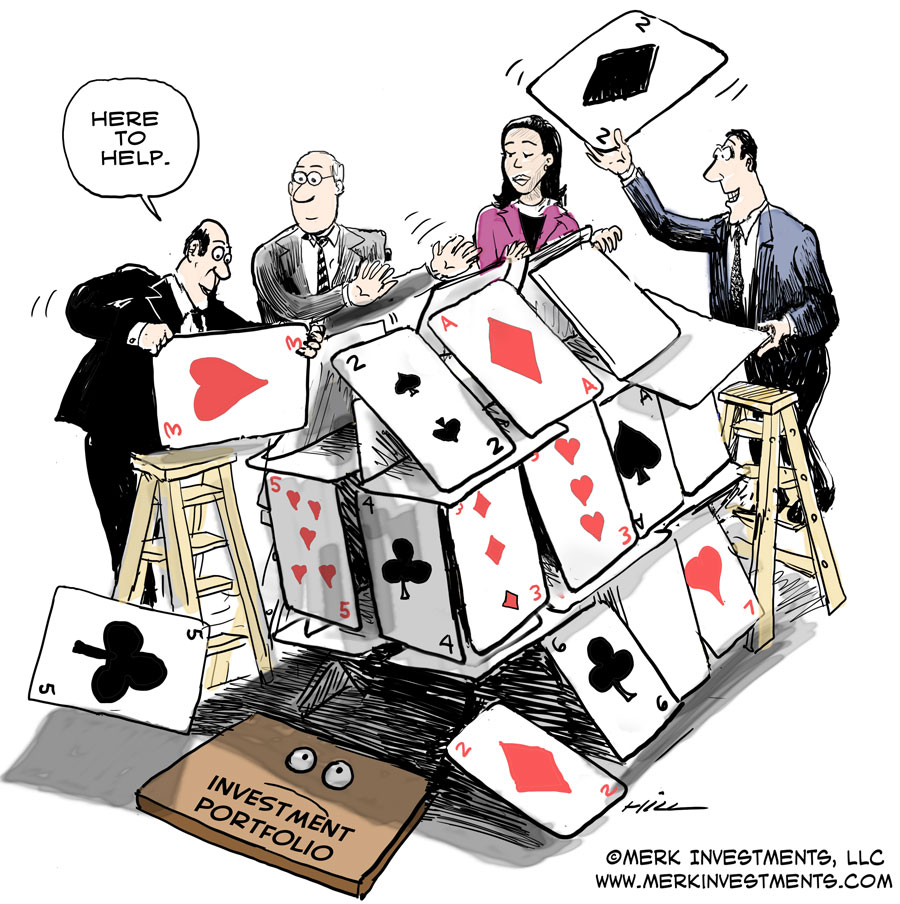
House of Cards

As interest rates rose and the dollar strengthened, investigators found it likely that it became increasingly difficult for Mr Calvi to pay his loans in dollars with the dividends from his shares, which were often paid out in weak Italian lira. To remain solvent, he was forced to borrow more.

”It was a house of cards that was bound to fall down,”

one official said.

There is speculation that the Archbishop may have agreed to the deal to help out an old colleague and financial adviser since Banco Ambrosiano is regarded as one of Italy’s ”Catholic” banks with longstanding links to the Vatican. He may also have wished to protect the Vatican’s own stake in Banco Ambrosiano, which is assumed to be far more than the 1.8 percent shown by the latest official figures.

In the view of the Italian Treasury Minister, Nino Andreatta, and of Mr. Campi, the central bank’s governor, the Vatican acted improperly in issuing letters of comfort to Banco Ambrosiano at the same time as it asked the bank to absolve it from any responsibility for the Panamian companies. They believe it must therefore bear at least a moral responsibility for any losses incurred, according to senior officials.

Toward the end of his life, Mr. Calvi is said to have become increasingly involved with suspected underworld figures as his needs for ready cash increased. There are also rumours that he lent Peru $200 million to buy Exocet missiles for the Argentine forces during the Falkland war and thus became a target for the British secret service.

In light of the rumours, officials at the normally staid Bank of Italy and Finance Ministry expressed amazement at the finding by a London coroner that Mr. Calvi did indeed commit suicide by hanging himself under the bridge. The common reaction was:

”Why bother to go to London to do that?”

Scandalised Money Laundering

Paolo Cipriani, director of the bank, and his deputy Marco Tullio have resigned after the arrest by Italian tax police of a Vatican monsignor who used to work as a senior account manager in the Administration of the Patrimony of the Apostolic See (APSA), which manages Vatican real estate holdings. The monsignor, Nunzio Scarano, is being questioned in jail over allegations of money laundering, corruption and fraud.

Pope Francis is scandalised and angry at the goings on behind the scenes at the IOR. He has decided to begin his planned clean-up of the Roman Curia, the central government of the Church, with a complete shakeup at the IOR.

Vatican security officers have been instructed to freeze any attempt to meddle with IOR documents, while an internal commission of inquiry with wide powers prepares a secret report on the current financial shenanigans, for the eyes of Pope Francis only.

The Vatican Bank has a damaged image at a time when the Pope is urging his flock to turn their attention to the plight of the world’s poor. There is speculation that one of Pope Francis’ options could be to dissolve the IOR altogether and transfer all Vatican banking to a reliable commercial bank.

Stay informed and subscribe for free, with no hidden commercial interest, it is at our cost that you will be kept informed.

FINAL WAKE UP CALL

---

The Bankers of God (Film 2002)

https://rumble.com/v2cvjks-i-banchieri-di-dio-il-caso-calvi-the-bankers-of-god-the-calvi-affair-film-2.html?mref=fnp0r&mc=5q83h


The Bankers of God: The Calvi Affair (Italian: I banchieri di Dio also known as The God's Bankers) is an Italian drama film directed in 2002 by Giuseppe Ferrara. Audio in Italian with English subtitles.

The film tells the story of the scandal of Banco Ambrosiano, mainly related to the figure of Roberto Calvi. The Clearstream scandal exploded as a case full of intricate affairs involving the financial world, the Vatican, the Masonic Lodge P2, the Italian Secret Service, the Secret Intelligence Service, the Italian politics, the Mafia and the Banda della Magliana. The movie narrates in detail all these connections, trying to reconstruct events and plots.

Tuesday, August 22, 2023

The Global Uprising Against Central Bank Digital Currencies Has Begun!


Central bank digital currencies (“CBDCs”) are deeply unpopular with the general public and we have a chance of stopping them in their tracks, writes James Corbett. We’re already seeing a massive global pushback against the CBDC agenda. And this pushback is already causing the banksters to panic and pull back on their grand plan for world domination.

If you listen to the stenographers and presstitutes of the establishment dinosaur media, you’ll believe that CBDCs not only represent an exciting opportunity to bring our outdated paper money system into the digital age but that they’ll be bestowed on us by the benevolent central banker technocrats in the next year or two (if we’re lucky!).

If you listen to the pundits in the alternative media, however, you’ll believe that CBDCs not only represent the greatest threat to human freedom in our lifetime but that they’ll be forced upon us by the evil central bankster overlords in the next year or two (no matter what we do to fend them off).

Do you see the similarities in these two “competing” narratives? In both cases, you and your opinion about CBDCs are utterly irrelevant. It’s a fait accompli. You can love ’em or hate ’em, embrace them or recoil from them, but whatever your position, you will be forced to use them.

But this just isn’t true. In fact, we’re already seeing a massive global pushback against the CBDC agenda. And this pushback is already causing the banksters to panic and pull back on their grand plan for world domination.

Global Pushback

As we all know, when globalists are looking for a population to test out their latest technology of enslavement, they turn to Africa. From genetic manipulation to vaccine experiments to agricultural “revolution,” there is no shortage of examples of pathocrats disguising their experiments in technocratic tyranny as philanthropic concern for the poor, beleaguered people of that continent. It’s hardly surprising, then, that Africa is once again serving as a laboratory for the latest globalist technocrat pet project: digital money.

Accordingly, Nigeria became one of the first nations in the world to adopt an official, national central bank digital currency when the Central Bank of Nigeria (“CBN”) launched the eNaira amid much fanfare in October 2021. Promoted with the slogan “Same Naira, more possibilities!” the bankster class collectively held its breath as it watched this trial run of digital money unfold before their eyes.

The early results of this experiment, however, were not promising for the money manipulators. Despite a massive push of the eNaira by the government and breathless coverage of its rollout in the establishment media, it was revealed one year after the digital currency’s launch that a mere 0.5% of the population – one in every 200 people – had actually used it.

Not to be dissuaded, the CBN imposed new banking regulations last December, limiting cash withdrawals from ATMs to just ₦20,000 ($45) per day in a bid to increase the adoption of the nation’s CBDC.

The result? Again, utter failure. In fact, worse than utter failure. An actual uprising!

Nigerians took to the streets in February of this year to protest the cash restrictions and even attempted to storm the central bank.

CBN officials are now rearranging the deck chairs on the Titanic, upgrading the eNaira app to allow contactless payments, as if that was what was keeping people from using the banksters’ new digital enslavement tokens. But, try as they might to cover it up, the results of this experiment in monetary manipulation are now clearly visible for all to see. The eNaira is a failure of such gargantuan proportions that it now serves as a cautionary tale to central bankers around the world about how pear-shaped things can get when a digital currency is shoved down an unwilling public’s throat.

But it isn’t just Nigeria where people are saying “no, thanks” to the banksters’ digital money agenda.

In the European Union, protesters are already marching against the European Central Bank’s (“ECB”) proposed “digital euro.” In Croatia, for example, activists are warning that their government’s adoption of the euro “will be followed by the introduction of a digital euro, and then you will have to kiss all the freedoms you know goodbye.” In the Netherlands, meanwhile, demonstrators have staged rallies warning about the coming European CBDC and the ECB’s plan “to control the spending habits of the population.”

In Russia, too – where Putin has just signed the Central Bank of Russia’s “digital Ruble” into law as an official national currency – people are already threatening to go Nigerian on their government. Recent polls show that a mere 6% of Russians are actually excited about their opportunity to use the new CBDC. This widespread distrust of the digital Ruble is reflected in the coverage of the currency on the nation’s alternative news websites, which are filled with articles decrying the technocratic tyranny. One such article sums up the situation by noting that “we can only say that if citizens actively use non-cash transactions, then they themselves will enter the electronic banking concentration camp, seemingly completely voluntarily.”

And how about in the bastion of liberty, the beacon on the hill, the good ol’ US of A? Well, the grandstanding politicians – always eager to get in front of a parade and pretend they’re leading it – are already introducing (and even passing) legislation to ensure CBDCs never sees the light of day in America.

Of course, readers of this column will know that these political promises aren’t worth the paper they’re written on. Nevertheless, the proposed legislation is important because it reflects two underlying realities. Firstly, it demonstrates that the American public is not on board with the CBDC agenda. And secondly, it signals to the Fed and other central banksters that they risk upsetting their whole rigged monetary system if they push this agenda too far and too fast.

Banksters Running Scared

Yes, it’s safe to say that, on the CBDC issue at least, the momentum is not in the banksters’ favour. In fact, things are so bad that the establishment is now beginning to contemplate whether the mad dash toward CBDCs might just wake up the public to the whole monetary scam.

In a revealing op-ed in The Financial Times last month, Brookings Senior Fellow Eswar Prasad warned, “Central banks must not be blind to the threats posed by CBDCs.” After dutifully detailing all of the nifty features of programmable money that would-be world controllers can take advantage of (“imposing negative nominal interest rates to disincentivise saving,” for example), he then cautions the central banksters that their pretence of “political neutrality” might be exposed for the self-evident sham that it is if central banks start meddling in people’s everyday transactions.

Central banks could be viewed as political agents if their visibility into payment transactions is used for law enforcement or surveillance purposes. [. . .] Central banks already face threats to their independence, credibility and legitimacy. The more extensive the functionality of the money they issue, the greater the political pressures they will be exposed to. At a minimum, such innovations pose risks to the integrity of central bank money.

Oh, won’t somebody think of the central banksters’ credibility!?

And – wouldn’t ya know it?! – just as Prasad and others are beginning to warn that the banksters might be pushing too far and too fast with this whole “programmable money” idea, it looks like the monetary mafia are now stepping back from the CBDC brink . . . at least publicly.

Just this past week, the Central Bank of Colombia issued a white paper on the “Expected Macroeconomic Effects of Issuing a Retail CBDC,” which admits that if central banks push the cashless agenda too far and the situation “reaches a point where the use of cash is about to disappear, central bank money could lose its role as a monetary anchor for deposits and other forms of private money.” Also this past week, the Bank of Canada issued a report on “Unmet Payment Needs and a Central Bank Digital Currency,” which acknowledges that “consumers face few payment gaps or frictions and therefore might have relatively weak incentives to adopt and – especially – to use CBDC at scale.”

In other words, central bankers are quietly admitting there are no real advantages to retail CBDCs, and there are even potential downsides to their introduction.

Of course, as my astute readers will already know, this does not mean that the issue is settled, that the bankers have given up, and that the CBDC dream is officially done. No, it just means that they have to change tack and try to find other ways to cajole the public into the digital gulag. Perhaps this is why the central banking minions are now openly strategising about how best to sell their digital money agenda to an unwilling public.

Take the Bank of Israel, for example. It just released a new white paper purporting to identify “Principles for creating ‘Acceptance’ and ‘Network Effect’ for the Digital Shekel,” or, in plain English: “Ways to convince the rubes to use our virtual slave coins.” The document considers ideas for leveraging the “Network Effect” to artificially stimulate the adoption of the digital shekel. Naturally, the plan does not focus on ways to incentivise the use of CBDCs but rather on ways to enforce their acceptance, including obligating banks, payment providers and merchants to participate in the scheme or forcing the government to officially declare the digital shekel to be legal tender.

On its face, the fact that the banksters are now openly plotting how best to stuff digital money down the public’s throat may be a worrying development.

But, upon further reflection, the fact that the banksters are now turning from the carrots of incentives and bonuses and discounts to the stick of government regulation and enforced adoption does not mean that the anti-CBDC movement is doomed to failure.

On the contrary. The fact that the banksters are now actively engaged in a struggle against the general public are signs that we are winning and that CBDCs are not inevitable.

Resistance is Fertile

I’ve made the point before, but it bears repeating: the constant stream of propaganda, conditioning and censorship that we are subjected to from governments, establishment institutions and their lapdog media is not a sign of their strength. It is a sign of their weakness.

The fact that they have to spend billions of dollars a year pumping lies and misinformation into the heads of the citizenry to keep people from seeing the truth is a tacit admission that our thoughts and opinions actually do matter. After all, why would they bother propagandising to us at all if they didn’t require our approval (or at least our docile apathy) to continue pursuing their agenda?

Similarly, the fact that the banksters are ramping up the next stage of their CBDC indoctrination operation – attempting to convince an increasingly sceptical public that a complete overhaul of the fabric of our monetary reality is somehow beneficial to Joe Sixpack and Jane Soccermom – is a tacit admission that we are the ones who decide whether CBDCs are implemented or not. They can tout the benefits of their digital slave tokens all they want, but if we refuse to use them, then the CBDC world order will not come to fruition.

The banksters, for one, are well aware of this fact. But are we aware of it?

I understand why this message – that pushback and protest do matter and that the globalist agenda is not inevitable – is such an unpopular one in the “alternative” media. If the message is simply: “Relax, everyone! The battle is over and CBDCs have been defeated! Now go back to sleep!” then it is indeed no different from enemy propaganda.

But that is not the message here. Instead, the message is that the public is – for the time being, and until the propaganda machine kicks into high gear – overwhelmingly on our side. People DO NOT WANT programmable money and the vast majority see it for what it is: another trick on the part of the establishment to take more power and control away from everyday people and put it in the hands of the banksters and their cronies.

That’s why this is the time to seize the momentum of public opinion and steer it into actual productive activity. We can encourage Cash Friday awareness. We can build up local trading communities based on alternative and complementary currencies. We can introduce those around us to Agorist.Market. We can promote community currencies and precious metals and decentralised cryptos and barter circles and the million other forms of survival currency that clued-in Corbetteers have been researching for years.

The time has come to harvest those seeds you’ve been planting! The public is on our side!

Yes, your resistance and pushback do matter. It does make a difference. We do have a part to play in this. Now, let’s go out there and put the final nail in the CBDC coffin.

What are we waiting for?

The Corbett Report is an independent, listener-supported alternative news source. It operates on the principle of open-source intelligence and provides podcasts, interviews, articles and videos about breaking news and important issues from 9/11 Truth and false flag terror to the Big Brother police state, eugenics, geopolitics, the central banking fraud and more. 

It is edited, web mastered, written, produced and hosted by award-winning investigative journalist James Corbett.  To support The Corbett Report and receive its newsletter, sign up to become a member of the website HERE.

See James Corbett's Censored TedX Talk!

https://rumble.com/embed/v36mtx3/?pub=fnp0r